
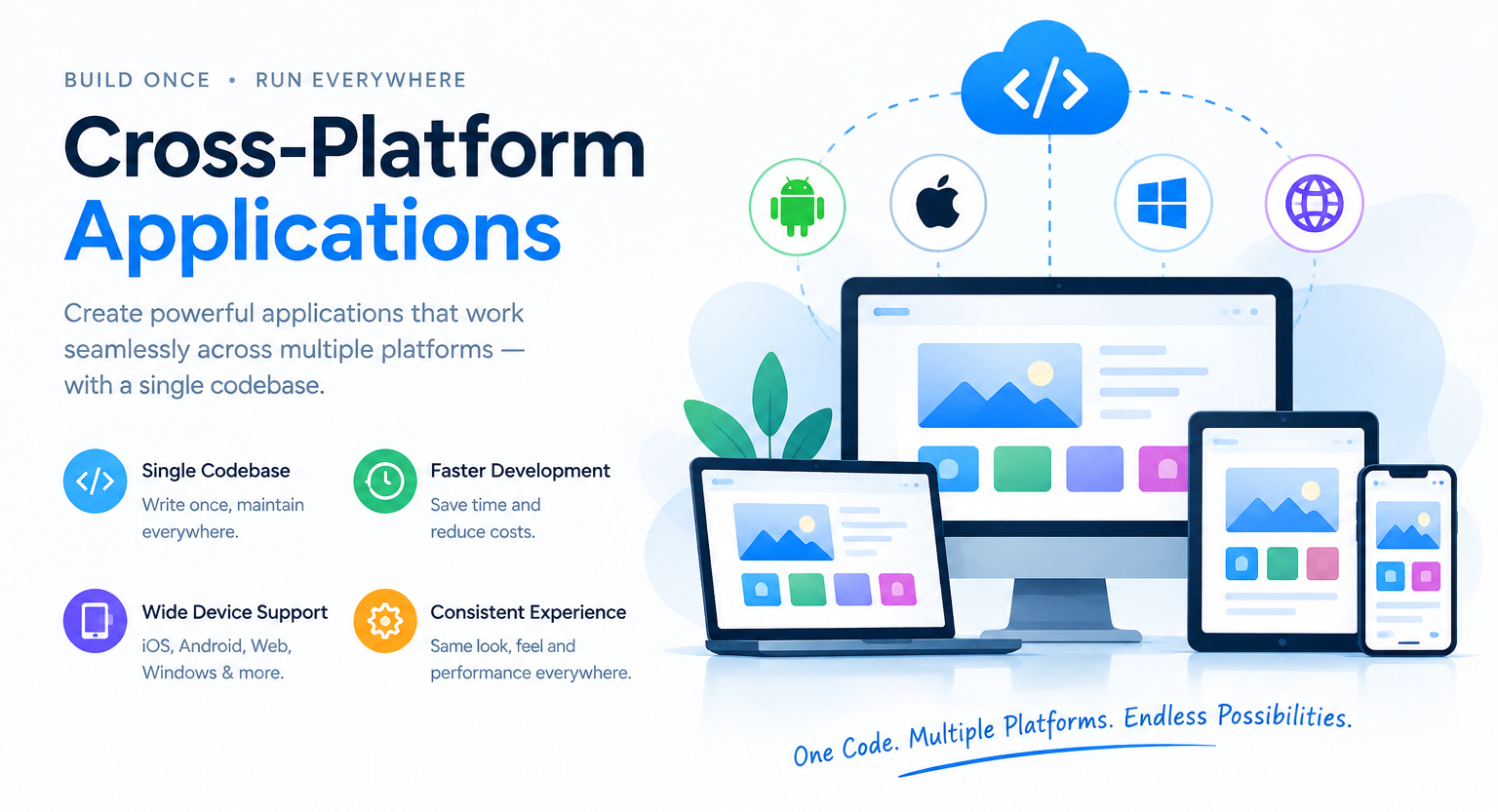
Building two separate apps means two teams, two codebases and two sets of bugs. Every new feature gets written twice, and sooner or later the Android and iPhone versions drift apart. Cross-platform development solves this. We write your app once in Flutter or React Native and release it as a proper installable app on Google Play and the App Store. Your users get a fast, polished app on whichever phone they carry. You get one project to pay for, one team to talk to, and updates that reach everyone at once.
Why It Makes Sense for Most Businesses
In India, most of your customers are on Android, but the ones on iPhone often spend more. Skipping either group costs you money, and building twice costs more. For shopping, delivery, booking, education, fitness and service apps, a well-built cross-platform app looks and performs just like a native one. We’ll also tell you when it doesn’t fit: heavy 3D games, advanced AR or apps built around very new Apple features are better off native, and for those we’d point you to our native iOS development service.
What You Get
Everything needed to go from idea to a live app on both stores.
- One Codebase in Flutter or React Native. Most of your app is written once and runs on both platforms. Fixes and features are built a single time, which keeps your costs and your timeline down for the life of the app.
- Feels Right on Each Phone. One design system, adjusted where it matters. The Android back button behaves the way Android users expect, iPhone users get their swipe-back gesture, and dates, menus and pop-ups follow each platform’s habits.
- Full Access to Device Features. Camera and document scanning, GPS and maps, push notifications, fingerprint and face login, and payments through UPI, cards or wallets.
- Light and Usable on Patchy Networks. Small download size, careful use of mobile data, and offline storage that syncs once the connection is back, so the app works on budget phones and in low-signal areas too.
- Launch on Both Stores. Beta testing through Google Play testing tracks and TestFlight, store listings with screenshots and keywords, and submission to both stores so you can announce one launch date.
- One Backend, One Update Cycle. Both apps talk to the same server and admin panel, and after launch every fix and feature goes out to Android and iPhone users together.
How We Build and Launch Your App
Four stages, with a working app on your own phone long before the public launch.
Discovery and Wireframes 2–4 days
We map your users, their journeys and the features that matter for launch, and pick the right framework. You receive wireframes, a scope document and a fixed-price proposal.
App Design 1–2 weeks
Every screen designed once and checked on both an Android phone and an iPhone, shared as a clickable prototype for your approval.
Development and API Integration 3–6 weeks
We build the app and connect it to your backend, sending you test builds on both platforms as features are finished so feedback comes early.
Testing and Dual Store Launch 1–2 weeks
Testing on real Android phones across price ranges and on iPhones, store listings, submission to Google Play and the App Store, and handover documentation.
We didn’t have the budget for two separate native teams. Softxcite built one app that genuinely feels native on both Android and iPhone, and we launched on both stores in the same week.
Aditya Bhalla, Founder, QuickCart Grocers
Frequently Asked Questions
Flutter or React Native: which one will you use?
Both are mature and used by large companies. Flutter is our usual pick for apps with custom designs and lots of animation. React Native fits well when you already have a JavaScript or React web team who will maintain the app later. We recommend one during discovery and explain why.
Will a cross-platform app feel slower than a native app?
For most business apps, users will not notice any difference. Shopping, booking, delivery, education and service apps run smoothly on Flutter and React Native. The gap only shows in heavy 3D games, advanced AR or apps that depend on very new platform features, and for those we recommend native development instead.
Can the app use the camera, GPS, notifications and UPI payments?
Yes. Camera, GPS, push notifications, fingerprint and face login, file uploads and payment gateways with UPI all work in cross-platform apps. If a feature needs platform-specific code, we write that small part natively and connect it to the shared app.
Do we need developer accounts on both app stores?
Yes. Google Play charges a one-time USD 25 registration fee and the Apple Developer Program costs USD 99 a year. Registering both in your company name means the listings, reviews and revenue belong to you. We help with enrolment and handle the technical setup.
Can we launch on Android first and add iOS later?
Yes. Many of our clients in India start with Android, where most of their users are, and release on iPhone a few weeks later. Because the code is shared, adding iOS is mostly testing and store submission, not a second build.